





Manufacturing has a perception challenge, but more importantly, it has an engagement opportunity.
While awareness of modern manufacturing is growing, many students still do not fully understand what a career in this field looks like or how they fit into it. The difference between awareness and action comes down to one thing: experience.
For educators and administrators, the goal is no longer just introducing manufacturing as a concept. It is about creating environments where students can actively explore, experiment, and see themselves in these careers.
So how do we move from simply talking about manufacturing to truly engaging students in it?
Moving Beyond Awareness to Experience

Students are far more likely to pursue a pathway when they can connect it to something tangible. Hearing about advanced manufacturing is one thing. Interacting with it is another.
That shift happens when classrooms become places where students do not just learn about systems, but actually use them.
When students build and test prototypes, program automated systems, troubleshoot real-world challenges, and work through iterative design processes, they begin to understand manufacturing as a dynamic, problem-solving environment rather than a static career choice.
Engagement grows when learning feels real.
Making Learning Hands-On and Purpose-Driven
Hands-on learning is often talked about, but the real impact comes when it is paired with purpose.
Instead of isolated activities, students benefit most from experiences that mirror real-world applications. This could include:
- Designing a product to solve a specific problem
- Creating efficient production workflows
- Simulating quality control processes
- Collaborating on team-based manufacturing challenges
These types of experiences help students answer an important question:
Why does this matter?
When students see the connection between what they are doing and how it applies outside the classroom, their level of investment changes. They are no longer completing assignments. They are solving problems.
Giving Students Voice and Ownership
One of the most powerful ways to increase engagement is by giving students a sense of ownership over their learning.
Manufacturing pathways naturally lend themselves to this because they are rooted in creation and innovation.
Educators can foster this by:
- Allowing students to choose project themes or outcomes
- Encouraging creative problem-solving approaches
- Incorporating open-ended challenges instead of step-by-step tasks
- Letting students iterate, learn from mistakes, and improve
When students feel like their ideas matter, they become more invested in the process. They begin to take pride in what they build, and that pride often translates into deeper interest in the field itself.
Connecting the Classroom to the Real World
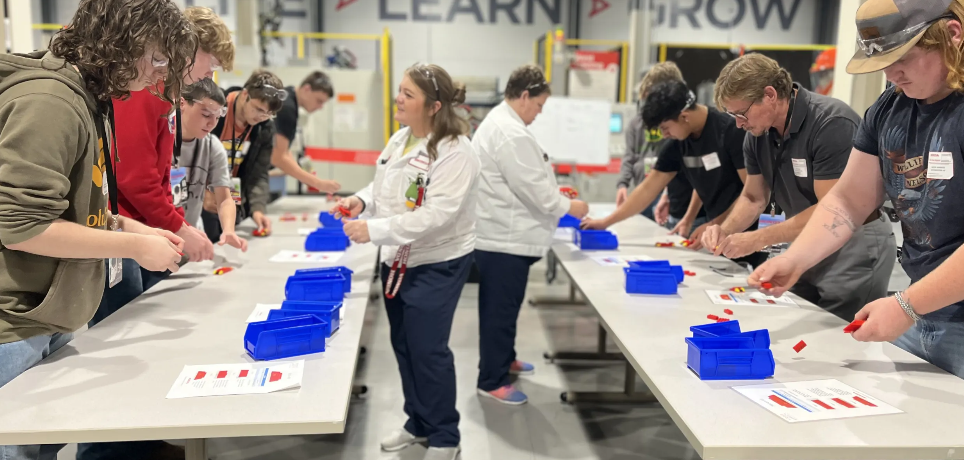
Relevance is a key driver of engagement.
Students are more motivated when they can clearly see how their learning connects to real careers and real opportunities. This is where partnerships with industry become incredibly valuable.
Simple, intentional connections, such as bringing in guest speakers from local manufacturing companies, organizing facility tours, or offering internship/work-based learning opportunities, can make a big impact.
These experiences help students visualize their future. They also reinforce that what they are learning is not hypothetical and is directly aligned with in-demand skills.
Integrating Manufacturing Across Disciplines
Manufacturing does not exist in a silo, and neither should manufacturing education.
One of the most effective ways to deepen engagement is by integrating manufacturing concepts across multiple subject areas.
For example:
- Math becomes more meaningful when applied to measurement, precision, and efficiency
- Science connects through materials, energy, and systems
- Technology plays a role in automation, programming, and design
- Creativity comes into play through product design and innovation
This approach helps students see manufacturing as a blend of technical skill and creative thinking rather than a narrow career track.
Building Confidence Through Skill Development
Engagement is not just about excitement; it is also about confidence.
Many students hesitate to pursue technical pathways because they are unsure of their abilities. Hands-on manufacturing experiences help break down that barrier by allowing students to learn through doing.
As students master new tools and technologies, solve increasingly complex challenges, and work collaboratively with peers, they begin to build confidence in their skills and their potential.
That confidence is often the turning point from passive interest to active pursuit.
Creating a Clear Path Forward
Engagement is strongest when students can see where their efforts are leading.
A well-designed manufacturing pathway helps students understand what skills they are developing, how those skills connect to careers, and what next steps are available after graduation.

This might include:
- Industry-recognized certifications
- Dual-credit opportunities
- Direct connections to local employers
- Continued education pathways
When students can visualize a future, they are more likely to stay engaged and committed.
Turning Engagement Into Opportunity
The demand for skilled talent in manufacturing continues to grow, and education plays a critical role in meeting that need.
Building a strong workforce pipeline starts with engagement. It starts with classrooms that prioritize hands-on, meaningful experiences, real-world application, and strong connections to industry.
When these elements come together, students don’t just learn about manufacturing. They see themselves in it!
Moving Forward
As you evaluate your own programs, consider this:
Are students actively participating, or just observing?
Are they solving problems, or simply completing tasks?
Do they see a clear connection between what they are learning and their future?
If the goal is to prepare students for high-demand, high-skill careers, engagement is essential.
Supporting Your Manufacturing Pathway
At Buckeye Educational Systems, we work alongside educators to help bring these experiences to life. From hands-on learning environments to classroom technologies that support real-world application, our goal is to help schools create programs where students can build skills, confidence, and curiosity.
Whether you are expanding an existing program or just getting started, the right tools and support can make all the difference.